
Old Tile, Carpet Glue and Black Mastic on a Basement Floor: What Happens Before a Coating
Quick answer: A floor coating can't go over old tile, carpet glue or mastic. Everything has to come off so the coating can bond to clean, ground concrete. In older Michigan homes, the black glue under old tiles may contain asbestos, so have suspect material tested by a professional before anyone scrapes, grinds or sands it.
A lot of basements around Downriver were finished decades ago. Pull back the carpet or look under the old vinyl, and you'll often find squares of tile, patches of yellow carpet glue, or a layer of thick black adhesive stuck to the concrete.
If you're thinking about a clean, bright coated floor down there, that old layer is the first thing to deal with. Here's what it means for your project, what to do first, and how the slab gets ready for a coating.
Why the old layer has to come off
A professional floor coating works by bonding into the concrete. At Fortified, every floor is mechanically ground first so the base coat can grab the surface. Anything sitting between the coating and the slab becomes the weak link:
- Tile can loosen or crack, taking the coating with it.
- Carpet glue stays soft and gummy, so the coating has nothing solid to hold.
- Mastic is an adhesive by design. It was never meant to be a base for a new floor.
Coating over any of these would be like painting over wallpaper. It might look fine for a while, but the new finish is only as strong as the old layer underneath. That's the same reason coatings peel in garages, which we cover in why garage floor coatings peel.
First things first: think about asbestos
This is the part many homeowners don't know about. Some older floor tiles and the black mastic under them were made with asbestos. The EPA has published guidance specifically about asbestos-containing floor tiles and mastic.
Asbestos isn't usually a problem while it's left alone. The risk comes when it's disturbed and fibers get into the air. The EPA's advice for homeowners is clear (EPA: protect your family from exposures to asbestos):
- If you suspect a material contains asbestos, don't touch it.
- Don't sand or try to level asbestos flooring or its backing.
- Taking samples yourself is not recommended.
- If remodeling might disturb it, removal by a trained and accredited asbestos professional is needed.
So if your house is older and you see old tiles or black adhesive, the safest first step is to have it tested before any removal starts. If the test comes back clean, the floor can move on to normal prep. If it doesn't, a licensed professional handles the removal, and then the concrete can be prepared for a coating.
Please don't start scraping or grinding on your own to "get it ready." Leave it as it is and talk it through at your estimate.
What removal and prep look like
Once the old layer is cleared to come off, the work usually goes in this order:
- Remove the old flooring. Tiles, carpet and pad come up, along with tack strips and any nails.
- Take off the adhesive. Glue and mastic residue have to be removed so the bare concrete is exposed.
- Grind the whole floor. Diamond grinding opens up the concrete and takes off what's left on the surface.
- Repair cracks and low spots. Old cracks are filled and ground smooth.
- Check for moisture. Basements are below grade, so the slab is checked before the coating goes down.
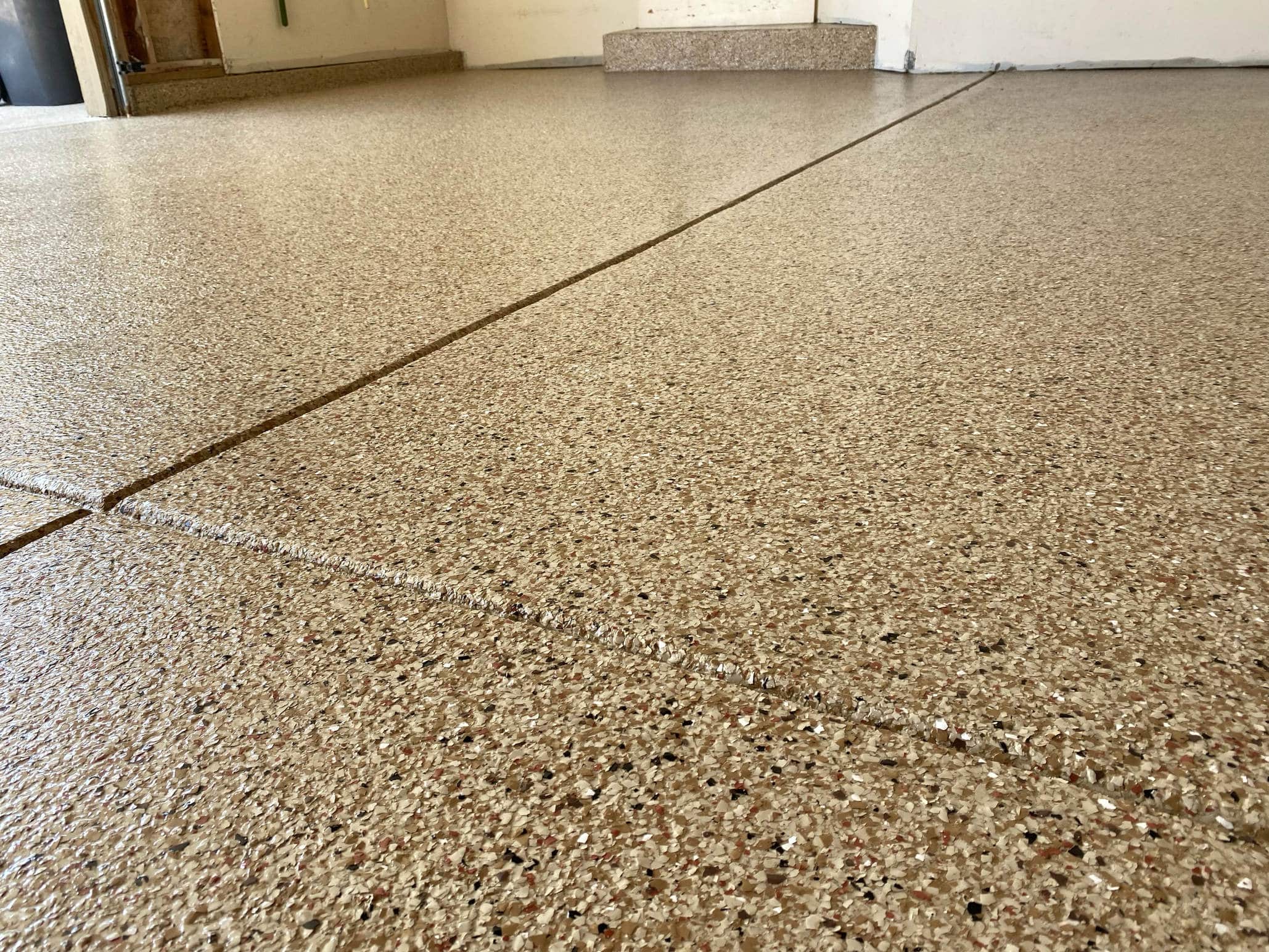
- Coat. A 100% solids polyurea base coat, a full flake broadcast, and a UV-stable polyaspartic topcoat.
You can see a real example in our basement floor transformation with old tile and mastic removed.
Don't forget about moisture
Old flooring can hide moisture problems. Carpet and tile sometimes cover damp spots, efflorescence (white, chalky deposits) or old water stains. Once the floor is bare, it's much easier to see what's going on.
A coating creates a waterproof, easy-to-clean surface, but if water is actively coming in through cracks or walls, that source needs to be fixed first so the new floor lasts. Our basement floor coating guide explains how to check your slab and what a coating can and can't do for a damp floor.
Why a coated floor makes sense in a basement
Once the old layer is gone, a coating is a great fit for a Michigan basement:
- It's waterproof and non-porous, so spills and the occasional wet boot wipe right up.
- It stops concrete dust, which helps keep the whole basement cleaner.
- There's no carpet to hold dampness or odors.
- It brightens the space and makes it feel like a real part of the house.
- It's safe for indoor use once cured.
See finished basements from our own crew in the Allen Park basement and Taylor basement transformations, or visit our Taylor and Allen Park pages.
What to have ready for your estimate
- Roughly how old the house is, and whether you know when the basement was finished.
- Any test results if the flooring has already been checked for asbestos.
- Spots where you've seen water, dampness or white deposits.
- How you plan to use the room: storage, a family room, a gym or a workshop.
Frequently asked questions
Can you coat right over old basement floor tile?
No. A coating has to bond to clean, ground concrete. Old tile, carpet glue and mastic sit between the coating and the slab, so they need to come off first.
Could the black glue under my old tiles contain asbestos?
It's possible, especially in older homes. The EPA notes that some floor tile mastic contains asbestos. Have suspect material tested by a professional before anyone scrapes, grinds or sands it.
Do I need to remove the old tile myself before an estimate?
No. Leave it as it is. During the walkthrough, Joe will look at what's on the floor and talk through the plan with you.
Ready to finish your basement floor?
Joe will look at what's on your floor now, explain each step, and give you a straightforward quote. Book your free in-home estimate, learn more about our residential floor coatings, or call or text (734) 600-9542.