
Garage Floor Mats, Interlocking Tiles or a Coating: What Works Best in a Michigan Garage?
Quick answer: Mats and tiles sit on top of your concrete. A coating becomes the surface of your concrete. A containment mat is a smart, low-cost way to catch slush under the car, but it only covers one spot. Interlocking tiles cover everything, but their seams let water and grit reach the slab below. A professional coating seals the whole floor so salt and water stay on top where you can clean them up, and you can still add a mat on top if you like.
As soon as the first snow hits Southeast Michigan, garage floor mats start flying off store shelves. It makes sense. Every car that pulls in brings a wheel well full of salty slush, and nobody wants it eating the floor.
So which option actually protects your garage? Here's an honest look at each one, what it does well, where it falls short, and how they can work together.
The options at a glance
| Feature | What it does well | Where it falls short |
|---|---|---|
| Containment mat | Catches meltwater and salt under the car | Covers only the parking spot; must be emptied; can shift or tear |
| Roll-out mat | Covers more floor, cushions underfoot | Water can run under the edges; can curl or move |
| Interlocking tiles | Covers the whole floor, no cure time | Seams let water and grit through to the concrete below |
| Professional coating | Seals the whole slab; salt and water stay on top | Garage is out of use about two days while it cures |
Containment mats
A containment mat is a large rubber or vinyl mat with a raised edge. You park on it, and it holds the meltwater that drips off your car. Then you squeegee or wet-vac the water out.
What they do well: They're affordable, easy to put down, and they catch a lot of the mess in the one place it lands. For a renter or anyone who can't change the floor, they're a good tool.
Where they fall short:
- They only cover the parking spot. Slush still drips at the door, gets tracked by boots, and splashes when you open the car door.
- They need to be emptied. In a heavy snow week, a full mat can overflow onto the floor around it.
- Cheaper mats can shift or tear under tires, so size matters. Garage Living recommends buying one sized for your vehicle.
Roll-out mats
Roll-out mats are long sheets of rubber or PVC that cover a bigger area, sometimes the whole floor. They're popular in garage gyms and workshops because they're softer underfoot.
They feel nice, but they don't seal anything. Water that gets on the mat can run off the edges and collect underneath, where it sits against the concrete. Over a Michigan winter, that hidden water and salt can do just as much harm as an open puddle, and you won't see it until you lift the mat.
Interlocking tiles
Interlocking tiles snap together like a puzzle and cover the whole floor. They come in lots of colors and patterns, and you can walk on them right after they're laid.
The trade-off is the seams. Every edge where two tiles meet is a place where water, salt and fine grit can slip through to the concrete. Some tiles are designed with gaps or drainage channels so water runs underneath on purpose. That keeps the top dry, but the slab below can stay wet and salty all winter. Cleaning it means pulling up tiles.
A professional floor coating
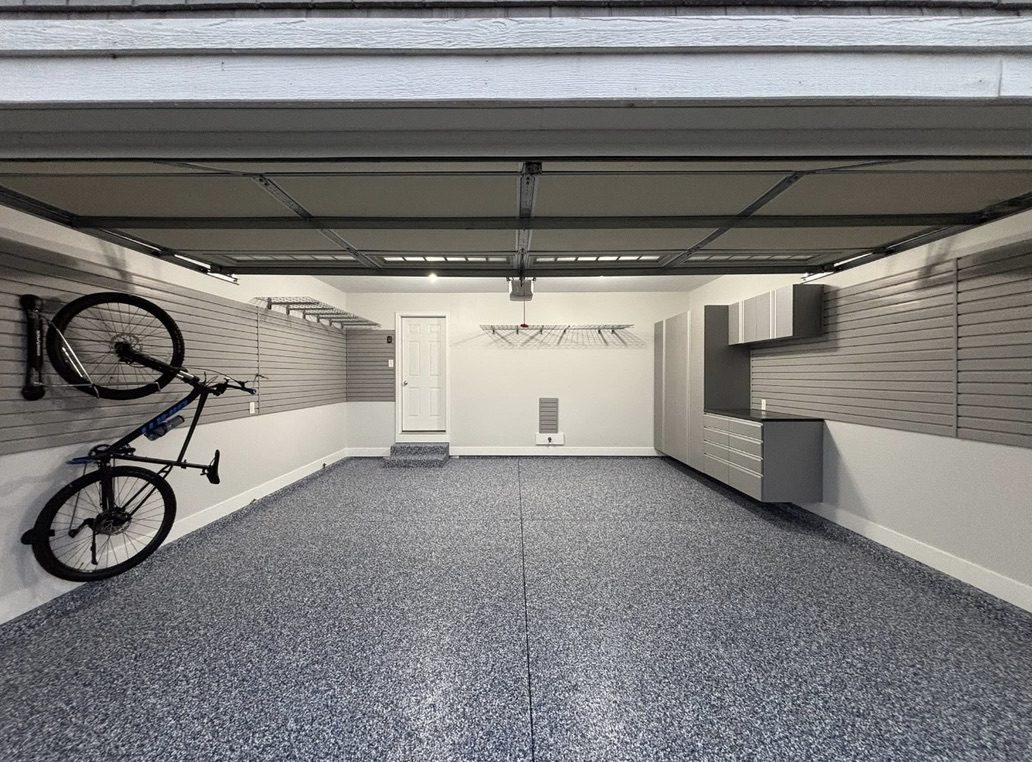
A coating takes a different approach. Instead of covering the concrete, it seals it. At Fortified, every floor starts with diamond grinding and crack repair, then a 100% solids polyurea base coat, a full broadcast of decorative flake, and a UV-stable polyaspartic topcoat.
The result is a non-porous surface. Salt, slush and oil stay on top, where a squeegee and mop take care of them. There are no seams, no edges for water to run under, and no hidden wet concrete. Here's how it holds up in our Michigan winter is coming video.
A few other benefits:
- The flake texture adds grip, and an anti-slip additive can go into the topcoat for extra traction when snow melts off the car.
- It's backed by a 15-year manufacturer warranty against chipping, peeling and delaminating, plus a lifetime warranty against UV fading.
- It brightens the whole room, which makes the garage feel like part of the house.
The main trade-off is time. You'll keep cars out for about two days while the floor cures, with light foot traffic after about 24 hours and parking after about 48 hours.
Can you use both?
Absolutely. A coating and a containment mat work well together. The coating protects the whole slab, and the mat cuts down on how much water you need to move after a big storm. If you lift weights or stand at a workbench for hours, a few rubber mats in those spots add comfort without trapping water across the whole floor.
Our guide to the best floor for a garage gym or workshop covers that setup in more detail.
How to choose for your garage
- Renting or moving soon? A good containment mat is a sensible, low-cost step.
- Want comfort in one area? Use rubber mats where you stand or work out.
- Want the concrete protected for the long haul? A coating is the option that seals the slab itself.
- Already seeing pits, flaking or white salt stains? The damage has started. Our post on road salt damage explains what's going on.
And if you're getting organized at the same time, our garage cabinets and storage get bins, tools and winter gear up off the floor so it's easier to keep clean.
Frequently asked questions
Are garage floor mats enough to protect concrete in winter?
A containment mat catches a lot of slush under the car, but it only covers part of the floor, and salty water still reaches the concrete around it and any time it overflows. A coating protects the whole slab.
Can I put a containment mat on a coated garage floor?
Yes. The coating protects the whole floor, and the mat simply collects meltwater so you have less to squeegee out.
Do interlocking garage tiles protect the concrete underneath?
They cover it, but water, salt and grit can work through the seams and sit on the concrete below, where you can't see or clean it. Lifting the tiles to clean underneath takes real work.
Protect the whole floor this winter
Our polyurea systems can be applied in cold weather, so it isn't too late in the season. Book your free in-home estimate, learn more about our residential floor coatings, or call or text (734) 600-9542.