
Is a Coated Garage Floor Slippery? Traction, Snowmelt and Michigan Winters
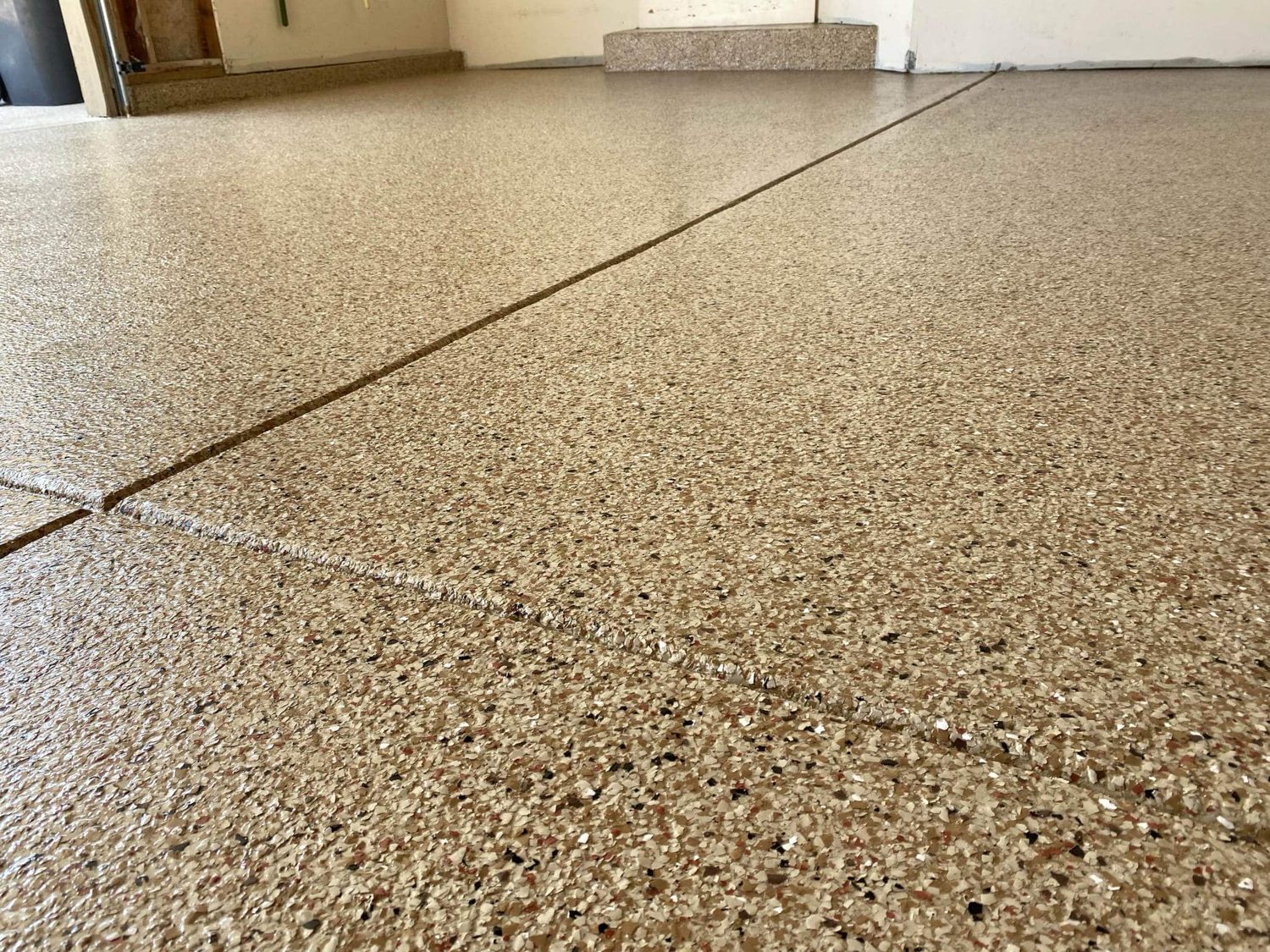
Quick answer: A clean, dry flake floor coating is not a slippery floor. The flakes give the surface texture, which helps your shoes grip. Like any smooth, sealed surface, it can get slick when snowmelt, slush or oil sits on it, so in Michigan we can add an anti-slip additive to the topcoat for extra traction where you need it most.
It's one of the most common questions we hear at estimates around Downriver, and it's a fair one. You've probably seen glossy floors in showrooms and wondered what happens when you pull in on a January night with a car full of snow.
Here's an honest look at what makes a garage floor slippery, how a flake coating is built for grip, and the simple things you can do to keep your footing all winter.
What actually makes a floor slippery?
A floor isn't slippery on its own. It's what's sitting on top of it. Almost every slip in a garage comes down to something getting between your shoe and the surface:
- Water and snowmelt. A thin film of water on any smooth surface cuts grip. In a Michigan garage, that's the slush dripping off your wheel wells from November to March.
- Oil, antifreeze and other fluids. These are slicker than water and don't dry up on their own.
- Fine dust and sawdust. A layer of dust on a workshop floor acts like tiny ball bearings under your feet.
- Salt film. Dried road salt leaves a white, powdery haze that can feel slick when it gets damp again.
Bare concrete isn't immune to any of this. Old garage slabs that have been worn smooth, or that are soaked with oil, can be slick too. The goal is a floor with built-in texture that's also easy to keep clean, so those slippery layers don't build up.
How a flake coating is built for grip
A Fortified floor isn't a single coat of paint. It's a system, and the way it's built matters for traction:
- The concrete is ground first. Diamond grinding opens up the surface so the base coat can bond into it.
- A 100% solids polyurea base coat goes down.
- Decorative flakes are broadcast across the wet base coat, then the loose flakes are scraped off. This leaves a surface with a natural, subtle texture.
- A clear, UV-stable polyaspartic topcoat seals everything in. This is the layer where an anti-slip additive can be mixed in.
Because the flakes sit in the surface, a flake floor has more texture than a smooth, solid-color finish. That's one reason most homeowners choose flakes, along with how well they hide dust, salt and small imperfections. You can see the flake broadcast in our flake toss video and the final layer going down in top coat day.
Anti-slip additives: the extra step for Michigan winters
If you want more grip than the flakes alone give you, we can add an anti-slip additive to the topcoat. It's a fine grit that gets mixed into the clear coat, so the floor feels slightly textured underfoot while the color and flake pattern still show through.
It's worth thinking about if any of these sound like your garage:
- You park in the garage all winter and bring in a lot of snow and slush.
- Someone in your home is older, uses a cane or walker, or is less steady on their feet.
- Your garage has a step down into the house or a sloped area near the door.
- Kids and dogs run in and out with wet feet.
- The floor doubles as a home gym or workshop.
- You're coating a patio, porch or pool deck that gets rain and splashing.
There's a trade-off to know about. More texture means more grip, but it also means the floor takes a little more effort to mop, because a textured surface holds onto dirt a bit more than a smooth one. That's why it's a conversation, not a one-size-fits-all answer. Joe brings flake samples to every estimate, so ask about traction while you're looking at colors.
Simple habits that keep any garage floor safer in winter
Even the grippiest floor works best with a little help. These habits make a big difference in a Southeast Michigan winter:
- Use a squeegee. Push meltwater toward the door or drain after a big snow. It takes a minute and keeps puddles from sitting.
- Put a containment mat under the car if you get a lot of snow off your wheel wells. Our guide to garage floor mats, tiles and coatings explains how they work together.
- Add a walk-off mat at the door into the house, where wet shoes go first.
- Wipe up oil and fluid leaks right away. A coated floor won't soak them up, which makes them easy to clean, but they'll stay slick until you do.
- Rinse off salt film every few weeks in winter so it doesn't build into a haze. See how to clean and care for a coated garage floor for the simple routine.
- Wear shoes with real tread when you're carrying things in from a snowy driveway.
Why bare concrete isn't the "safer" choice it seems
Some homeowners leave the concrete bare because they assume it grips better. Rough, new concrete does have texture, but a Michigan garage doesn't stay that way. Road salt and freeze-thaw slowly break down the surface, leaving pits that hold water and salt brine. Oil soaks in and leaves dark, slick spots that never quite come out. You can read more about that in what road salt is doing to your garage floor.
A coated floor gives you a sealed, non-porous surface that's easy to keep clean, with texture you choose instead of wear you didn't. For homeowners in Flat Rock, Woodhaven, Trenton and across Downriver, that's what makes it easy to love your garage again.
What to ask at your estimate
- Would an anti-slip additive make sense for my floor, and how will it feel?
- Which areas of my garage would benefit most from extra grip?
- How does the texture I pick affect cleaning?
- Is there a step, slope or doorway that needs special attention?
Want to see how a coated floor handles snow, salt and slush? Watch our Michigan winter garage floor video, or see our Flat Rock garage floor coating page for work close to home.
Frequently asked questions
Is a flake garage floor slippery when it's wet?
A clean, dry flake floor has good grip because the flakes give the surface texture. Any smooth floor gets slicker when water, slush or oil sits on it. For extra traction, especially in Michigan winters, an anti-slip additive can be mixed into the topcoat. Ask about it during your estimate.
Will an anti-slip additive change how my floor looks or cleans?
The additive is mixed into the clear topcoat, so the color and flake pattern still show through. The surface feels a little more textured underfoot, and it may take a bit more effort with the mop. Ask Joe about it at your estimate so you can decide what fits your space.
Can I add more grip to a floor that's already coated?
It may be possible to clean and lightly sand the surface and add a fresh topcoat with an anti-slip additive. Whether that works depends on the condition of the existing coating, so it's best to have someone look at it in person.
Love your garage again, with sure footing
A great garage floor should look good and feel safe, all year long. Joe will walk your space, talk through traction options with you, and give you a straightforward quote. Book your free in-home estimate, learn more about our residential floor coatings, or call or text (734) 600-9542.