
White Powder on Your Basement Floor? What Efflorescence Means and What to Do
Quick answer: White, chalky powder on a basement floor is usually efflorescence. It's mineral salt left behind when water moves up through the concrete and dries on the surface. It isn't harmful by itself, but it tells you moisture is coming through your slab, and it has to be removed before any floor coating goes down.
If you've ever moved a storage bin in your basement and found a white, crusty ring underneath, you're not alone. We see it all the time in Downriver basements, especially in older homes in Wyandotte, Lincoln Park, Allen Park and Taylor.
Most articles about this focus on basement walls. This one is about the floor: what that white powder is, how to tell it apart from mold or crumbling concrete, how to clean it, and what it means if you're thinking about finishing your basement floor.
What efflorescence actually is
Concrete looks solid, but it's full of tiny pores. Water from the soil under your basement slowly moves up through those pores. On its way, it picks up natural salts from the concrete and the ground.
When that water reaches the surface, it dries into the basement air. The water leaves, but the salt stays behind. That leftover salt is the white powder, crust or fuzzy-looking crystals you see on the floor.
That's why efflorescence often shows up:
- Along the edges, where the floor meets the foundation wall.
- Along cracks and control joints, where water has an easier path up.
- Under things that sit on the floor, like bins, rugs and boxes, where moisture collects.
- After heavy rain or the spring thaw, when the soil around your house is soaked.
Efflorescence, mold or crumbling concrete? How to tell
Three different things can leave white or gray powder on a basement floor. Here's how to sort them out with a few minutes and a spray bottle:
- Efflorescence: white, chalky or crystal-like, often in lines or rings. It crumbles to a powder between your fingers. Mist it with water and it will soften or dissolve. It has no smell.
- Mold: fuzzy or cottony, sometimes with green, gray or black spots mixed in. Mold needs something to feed on, so it usually grows on dirt, wood, cardboard or fabric rather than clean concrete. It doesn't dissolve in water, and it often smells musty.
- Dusting concrete: a gray, sandy powder that comes off the surface itself, usually where people walk. It's the top layer of the concrete wearing away. It doesn't come and go with the weather the way efflorescence does.
If you think you're looking at mold, don't sweep it dry and spread it around. The EPA's guide to mold, moisture and your home explains how to clean small areas safely and when to call a pro. And like efflorescence, mold is a moisture problem first.
How to clean efflorescence off a basement floor
Efflorescence is easy to remove. The trick is not adding a lot of water while you do it, because water is what brought the salt up in the first place.
- Start dry. Use a stiff nylon brush or broom to loosen the powder, then pick it up with a shop vac.
- Use a light vinegar mix for stubborn spots. A mix of white vinegar and water can help break down crusty deposits. Scrub, wipe up with a damp cloth, and let the area dry well.
- Skip the hose and pressure washer. Soaking the floor pushes more water into the slab and can make the white powder come right back.
- Be careful with strong acids. Harsh acid cleaners can damage concrete and are hard to use safely in a closed basement. Leave those to a pro.
- Run a dehumidifier afterward. The EPA suggests keeping indoor humidity below 60 percent, and ideally between 30 and 50 percent.
Then watch the spot. If the white powder comes back in a few weeks, especially after rain, water is still moving through the slab.
Why so many Michigan basements get it
Southeast Michigan is a perfect setup for efflorescence. Heavy clay soil is common across the Downriver area, and clay holds water against the foundation instead of letting it drain away. Then add our weather. Snow piles up against the house all winter, melts in spring, and the ground stays wet for weeks.
Older homes have a few more strikes against them. Many were built before plastic vapor barriers under the slab became common, and older drain tile can clog over the years. That doesn't mean your basement is in trouble. It just means a little efflorescence is normal in a lot of Downriver homes, and it's worth keeping an eye on.
A few simple outside checks often help more than anything you do inside:
- Keep gutters clean and make sure downspouts carry water several feet away from the house.
- Check that the soil around your foundation slopes away from the house, not toward it.
- Don't pile shoveled snow right against the foundation.
- Make sure your sump pump (if you have one) runs and drains away from the house.
When white powder means something bigger
A light dusting along the walls that shows up a couple of times a year is usually a minor issue. These signs point to more water than a little vapor:
- Thick crust that comes back within days of cleaning.
- Damp or dark patches on the floor after rain.
- Standing water near cracks, the floor drain or the base of the walls.
- Peeling paint on the floor or lower walls.
- A musty smell that doesn't go away.
If you see these, talk to a basement waterproofing or drainage contractor about where the water is coming from before you spend money on any new floor. Our guide to coating a basement floor in Michigan walks through moisture testing and the simple plastic sheet test you can do yourself.
Can you coat a basement floor that has efflorescence?
Often, yes, once it's handled the right way. What you can't do is roll a coating, paint or sealer on top of the white powder. A coating has to grip clean, sound concrete. If it's stuck to a layer of loose salt, it has nothing solid to hold onto, and salt and moisture under a coating can push it loose over time. That's one of the reasons we cover in why floor coatings peel.
Here's how a Fortified basement floor handles it:
- Look and test. Joe checks where the efflorescence is, how heavy it is, and takes moisture readings on the slab.
- Fix the source if needed. If water is actively coming in, that gets solved first. We'll tell you plainly if your floor isn't ready yet.
- Diamond grind. Grinding removes the salt deposits, old paint or glue, and the weak top layer, and opens up the concrete so the base coat can bond.
- Repair cracks and joints. The same cracks that let water and salt through are filled and repaired.
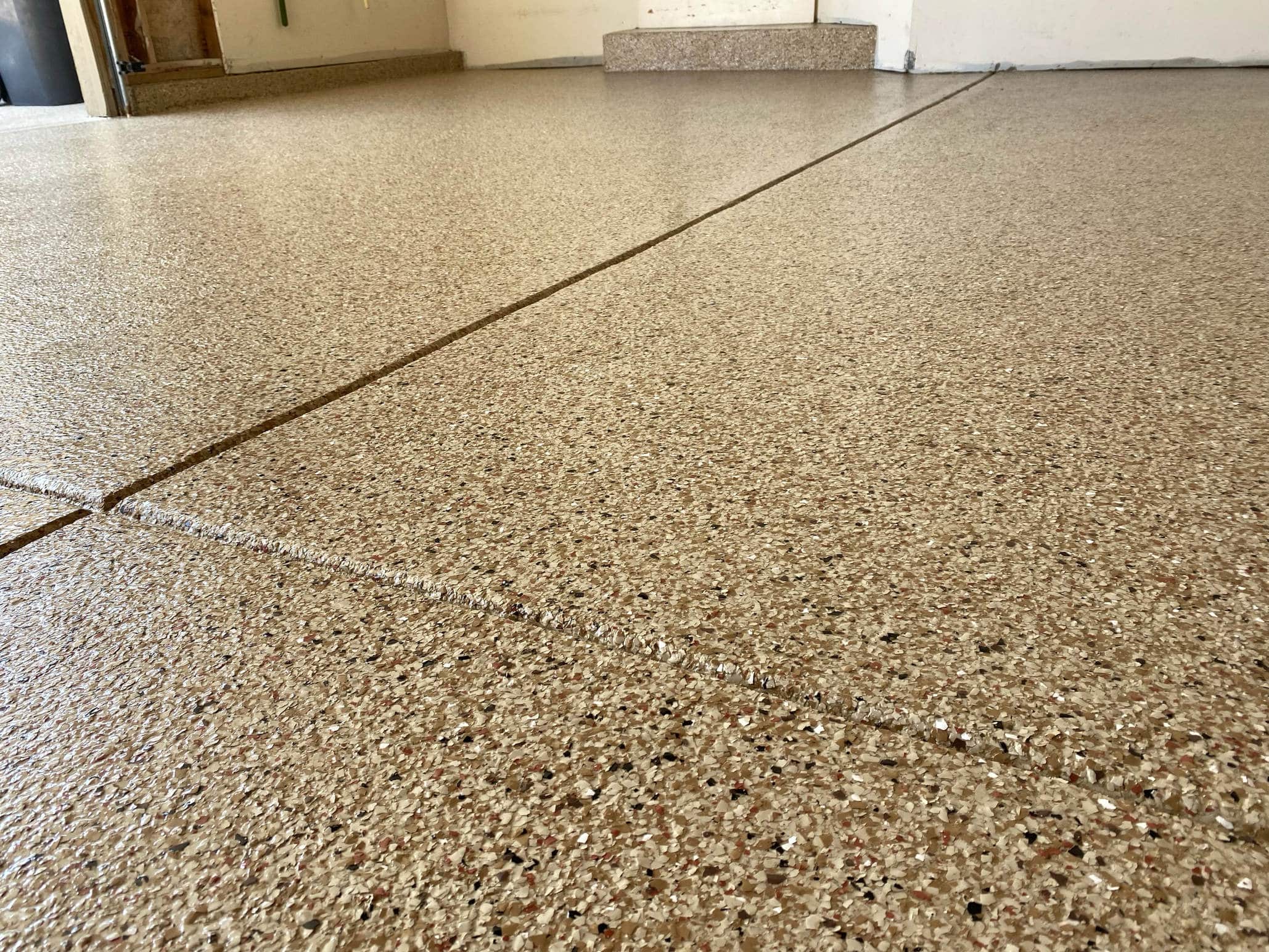
- Coat. A 100% solids polyurea base coat, decorative flakes and a clear, UV-stable polyaspartic topcoat give you a seamless floor that's easy to wipe clean.
If your basement also has old tile or black mastic, that comes off first too. See old tile, carpet glue and black mastic on a basement floor. You can watch a real before and after in our Taylor basement transformation, or see our Taylor floor coating page.
Frequently asked questions
Is the white powder on my basement floor dangerous?
Efflorescence itself is mineral salt, not mold, and it isn't toxic. It is a sign that water is moving through your concrete, so it's worth finding out where that water comes from. If the white stuff is fuzzy, grows on wood or cardboard, or smells musty, it may be mold instead and should be handled differently.
Will efflorescence come back after I clean it off?
If water keeps moving through the slab, yes. Cleaning removes the salt you can see, but new salt shows up as more water comes through and dries. If it comes back after every heavy rain or spring thaw, the moisture source needs attention.
Can you put a floor coating over efflorescence?
Not on top of it. The salt has to come off first, and diamond grinding removes it along with the weak top layer of concrete. The slab is also checked for moisture. A little efflorescence in an older basement doesn't rule out a coating, but water actively coming in has to be fixed first.
Get a straight answer about your basement floor
White powder on the floor isn't a reason to panic, and it isn't a reason to give up on a finished basement. It's a clue. Joe will look at your slab, check it for moisture, and tell you honestly whether it's ready for a coating now or needs something fixed first. Book your free in-home estimate, learn more about our residential floor coatings, or call or text (734) 600-9542.